What Is Propitiation?
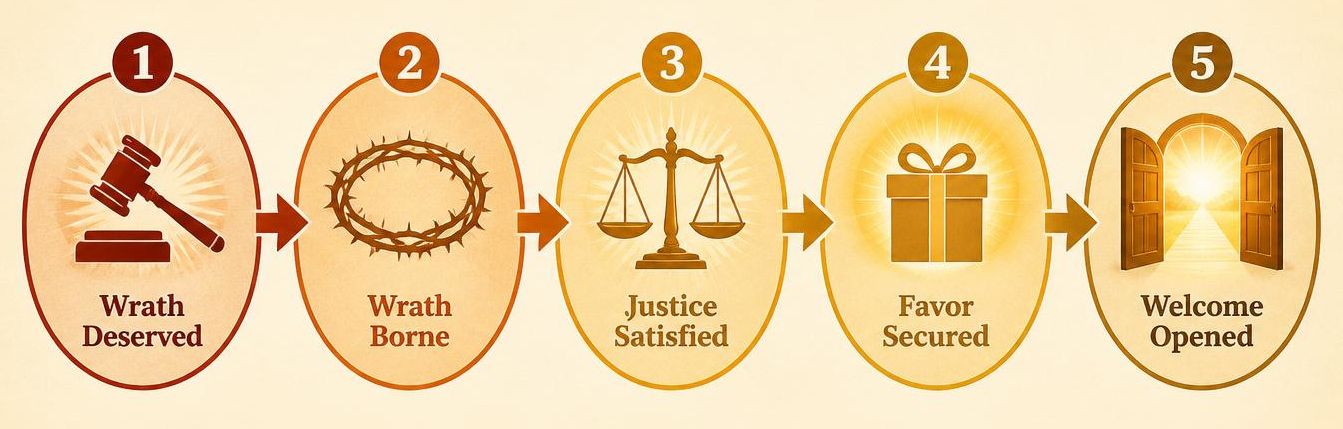

Propitiation Means Wrath Was Real
God’s wrath is not a flaw in His character or a loss of divine self-control. It is His holy, righteous, and settled opposition to evil. Because God is perfectly good, He cannot be indifferent toward sin. Propitiation matters because the wrath Christ bore was not imaginary, exaggerated, or symbolic. It was the just response of a holy God against real guilt.
Propitiation Means Wrath Was Borne
At the cross, Christ did not merely sympathize with sinners or suffer as an example. He stood in their place. The judgment our guilt deserved fell upon Him, and He willingly bore it in love. Propitiation means God’s wrath was not ignored or avoided. It was carried by the Son as the Substitute for His people.
Propitiation Means Justice Was Satisfied
At the cross, God did not overlook sin, excuse guilt, or set justice aside. He upheld His righteousness by judging sin in the willing Substitute. Christ bore what justice required, so that God may forgive sinners without compromising His holiness. Propitiation means mercy does not come by ignoring justice, but by satisfying it through the blood of Christ.
Propitiation Means Welcome Was Secured
Propitiation does not end with wrath removed. In Christ, the believer is brought into the favor, fellowship, and fatherly welcome of God. The cross does not leave us merely safe from judgment, standing at a distance, grateful to have escaped. Because Christ bore wrath and satisfied justice, the Father receives His people with delight. We are not merely spared. We are welcomed through Christ.